
George Pell
Former Cardinal · Vatican Treasurer · 1941–2023
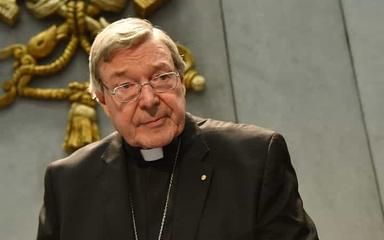
George Pell was the highest-ranking Catholic official in Australia and the third most powerful figure in the Vatican, serving as its inaugural Prefect of the Secretariat for the Economy. His career spanned decades of institutional leadership — Archbishop of Melbourne, Archbishop of Sydney, Cardinal — and became inseparable from the Catholic Church’s global sexual abuse crisis.
In 2018, a jury convicted Pell of five counts of child sexual abuse committed against two choirboys at St Patrick’s Cathedral in the 1990s. He was sentenced to six years in prison. In April 2020, the High Court of Australia unanimously overturned his convictions, finding that the jury ought to have entertained reasonable doubt. Pell was released after serving over a year in prison. He died on 10 January 2023 in Rome, aged 81, following complications from hip surgery.
Regardless of the High Court’s decision on the criminal charges, Pell’s legacy is defined by the Royal Commission into Institutional Responses to Child Sexual Abuse, which examined decades of systemic failures within the Catholic Church in Australia. The Commission heard evidence that Pell was aware of clergy abuse as early as the 1970s and took insufficient action. His testimony — delivered via video link from Rome in 2016, having declined to return to Australia — drew global attention and widespread criticism from survivors’ groups.
Pell’s Melbourne Response, launched in 1996 as the Church’s answer to the crisis, was later found to have capped compensation at $50,000 and operated in a way that prioritised the institution’s legal exposure over meaningful restitution. It became a case study in how institutions co-opt the language of accountability while evading it.
His inclusion on this site is not an endorsement. It is a record. Pell represents what happens when institutional religion operates without external accountability — when authority is treated as inherently trustworthy and loyalty to the institution overrides the welfare of individuals. The Catholic abuse crisis is not ancient history. It is ongoing, and Pell’s career sits at its centre.
Institutional cover-up
Pell served as Archbishop of Melbourne during a period when allegations of clerical sexual abuse were systematically suppressed. The Royal Commission into Institutional Responses to Child Sexual Abuse found that Church leaders, including Pell, were aware of offending priests and failed to act to protect children.
The Melbourne Response
In 1996, Pell launched the Melbourne Response — a Church-run process for handling abuse complaints. Critics, including the Royal Commission, found it was designed to minimise liability and payouts rather than deliver justice. Victims described it as re-traumatising, and compensation caps were set insultingly low.
Abuse of clerical authority
Pell’s career illustrates how institutional authority in the Catholic Church shielded individuals from accountability. His rapid ascent to Cardinal and Vatican Treasurer continued even as allegations mounted, demonstrating how the hierarchy prioritised reputation over the welfare of victims.
Culture of impunity
The Pell case became a symbol of the broader pattern: a global institution that moved accused priests between parishes, pressured victims into silence, and deployed legal resources to exhaust complainants. The culture of impunity was not incidental — it was structural.
The Dawkins vs Pell debate
In 2012, Richard Dawkins and George Pell appeared on the ABC’s Q&A programme for a televised debate on religion, atheism, and morality. The exchange is notable for Pell’s concession that the creation account in Genesis is not literal and his claim that “preparing for the world to come is the best way of preparing for this world.” Dawkins pressed him on the problem of suffering, the evidence for evolution, and the Church’s moral authority.
Richard Dawkins vs George Pell — Q&A (ABC, 2012)
Notable quotes
“Preparing for the world to come is the best way of preparing for the challenges in this world.”
“The church has been slow — too slow — to act, and I am deeply sorry for that.”
“Pell wasn’t just a bystander. He was the system. He embodied the institutional reflex to protect the church at the expense of its most vulnerable.”
“What is striking about the Pell case is not the conviction or the acquittal. It is the decades of evidence that the institution he led chose silence over justice, every single time.”