
Christianity
The world’s largest religion, with approximately 2.4 billion adherents — examined honestly.
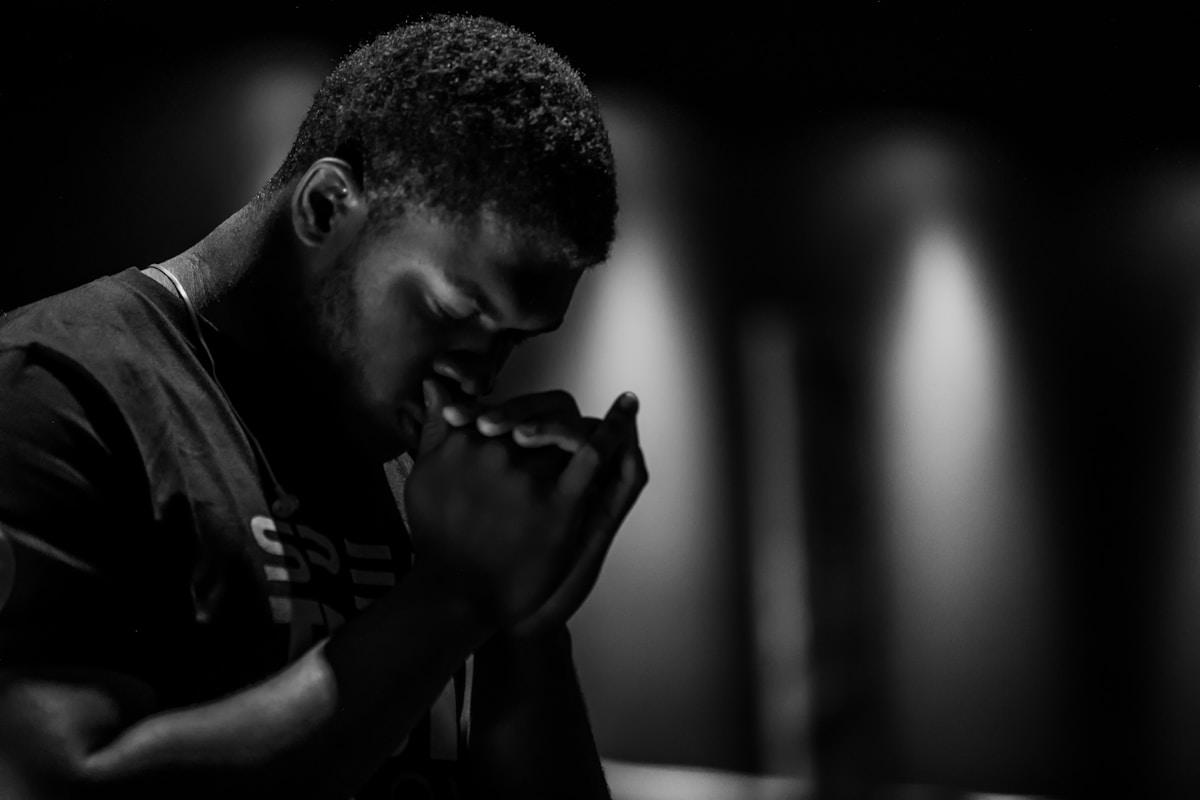
What is Christianity?
Christianity is a monotheistic Abrahamic religion centered on the life, teachings, death, and claimed resurrection of Jesus of Nazareth, whom adherents call “Christ” (from the Greek Christos, meaning “anointed one”). Christians believe Jesus is the Son of God and the awaited Messiah prophesied in the Hebrew scriptures. The religion teaches that through Jesus’s sacrificial death on a Roman cross, humanity can be reconciled with God and receive eternal life.
With roughly 2.4 billion followers — about 31% of the global population — Christianity is the world’s largest religion. It is the majority faith in over 150 countries, spanning every inhabited continent. Christianity has profoundly shaped Western civilization, influencing art, philosophy, law, science, education, and political structures for two millennia.
At its core, Christianity makes several extraordinary claims: that the creator of the universe became a human being, died, and physically returned to life; that faith in this event is the primary mechanism of salvation; and that sacred texts written over centuries by dozens of authors constitute the revealed word of God. Whether these claims are taken literally, metaphorically, or skeptically defines much of the landscape of religious thought.
How did Christianity begin?
Christianity emerged in the 1st century CE as a Jewish sect in Roman-occupied Palestine. Its founder, Jesus of Nazareth, was a Jewish preacher and healer who attracted a following in Galilee before being executed by Roman authorities around 30–33 CE under the prefect Pontius Pilate. The earliest Christians were Jews who believed Jesus had risen from the dead and was the long-awaited Messiah.
The apostle Paul (formerly Saul of Tarsus) played a pivotal role in transforming Christianity from a Jewish messianic movement into a religion open to Gentiles. His letters, written in the 50s CE, are the earliest surviving Christian documents — predating the Gospels by at least a decade. Paul argued that faith in Christ, not adherence to Jewish law, was the path to salvation, a position that provoked fierce debate with Jesus’s original followers in Jerusalem.
For its first three centuries, Christianity was intermittently persecuted by Roman authorities. This changed dramatically in 313 CE when Emperor Constantine issued the Edict of Milan, granting religious tolerance, and in 380 CE when Emperor Theodosius I made Christianity the official state religion of the Roman Empire. Historian Bart Ehrman notes that this transformation — from persecuted minority to imperial power — happened within a remarkably short period and fundamentally altered the religion’s character.
The Council of Nicaea (325 CE), convened by Constantine, established core doctrines including the Nicene Creed and the divinity of Christ. Subsequent councils at Constantinople (381), Ephesus (431), and Chalcedon (451) further defined orthodox belief. These were not dispassionate theological seminars — they were politically charged events where dissenting views were declared heretical and suppressed, often violently.
What is the Bible?
The Bible is Christianity’s sacred scripture, a collection of texts written by dozens of authors over roughly 1,000 years. It is divided into two main sections: the Old Testament (shared, in different forms, with Judaism) and the New Testament, which focuses on Jesus and the early church.
The Old Testament contains 39 books in the Protestant canon (46 in the Catholic canon, which includes the deuterocanonical books). It encompasses creation narratives, legal codes, history, poetry, prophecy, and wisdom literature. These texts were composed in Hebrew and Aramaic between roughly 1200 and 165 BCE.
The New Testamentcontains 27 books: four Gospels (Matthew, Mark, Luke, John), the Acts of the Apostles, 21 epistles (letters), and the Book of Revelation. These were written in Greek between approximately 50 and 120 CE. The canon was not formally settled until the 4th century, and many other early Christian writings — including the Gospels of Thomas, Peter, and Mary — were excluded.
Textual criticism, the scholarly study of biblical manuscripts, has revealed that no original manuscripts of any biblical book survive. What we have are copies of copies of copies, with thousands of variant readings between them. Scholar Bart Ehrman estimates there are more differences among surviving New Testament manuscripts than there are words in the New Testament. Most variants are minor (spelling, word order), but some are significant — including the story of the woman caught in adultery (John 7:53–8:11) and the longer ending of Mark (16:9–20), both widely considered later additions.
Major English translations include the King James Version (1611), the New International Version (1978), the English Standard Version (2001), the New Living Translation (1996), and the New Revised Standard Version (1989). Each reflects different translation philosophies and theological commitments.
The God of the Old Testament is arguably the most unpleasant character in all fiction: jealous and proud of it; a petty, unjust, unforgiving control-freak; a vindictive, bloodthirsty ethnic cleanser; a misogynistic, homophobic, racist, infanticidal, genocidal, filicidal, pestilential, megalomaniacal, sadomasochistic, capriciously malevolent bully.
What do Christians believe?
Despite enormous diversity, most Christian traditions share several core doctrines. These are the beliefs that have historically defined the boundary between orthodoxy and heresy.
The Trinity
Christians believe God exists as three co-equal, co-eternal persons: Father, Son (Jesus Christ), and Holy Spirit — one God in three persons. The Trinity is not explicitly stated in the Bible but was developed through centuries of theological debate and formalized at the councils of Nicaea (325) and Constantinople (381). It remains one of Christianity’s most distinctive and difficult-to-explain doctrines.
The Incarnation and Resurrection
Christians teach that God became a human being in the person of Jesus (the Incarnation), lived a sinless life, was crucified under Pontius Pilate, and physically rose from the dead on the third day (the Resurrection). The Resurrection is the foundational claim of Christianity. As Paul wrote: “If Christ has not been raised, your faith is futile” (1 Corinthians 15:17).
Salvation and atonement
Christianity teaches that humans are separated from God by sin, and that Jesus’s death served as an atoning sacrifice to bridge this gap. How exactly atonement works is a matter of long-standing debate: penal substitution (Jesus took the punishment humans deserve), moral influence (Jesus’s example inspires moral transformation), Christus Victor(Jesus defeated the powers of sin and death) — each model has had its champions.
Original sin
Drawing primarily from Augustine of Hippo (354–430 CE), most Western Christian traditions teach that all humans inherit a sinful nature from Adam and Eve’s disobedience in the Garden of Eden. This doctrine underpins the perceived need for salvation and has been criticized for creating a problem (universal guilt) that only the religion itself claims to solve.
Heaven, hell, and the afterlife
Christianity generally teaches that after death, individuals face judgment. The righteous receive eternal life in heaven (or, in some traditions, a renewed earth); the unrighteous face eternal punishment in hell. The nature and duration of hell varies by tradition — from literal eternal torment (traditional Protestantism and Catholicism) to annihilationism (the unsaved simply cease to exist) to universalism (all are eventually reconciled to God). For a deeper exploration, see our page on the afterlife.
What are the major Christian denominations?
Christianity is not one religion but a family of traditions with significant theological, liturgical, and organizational differences. The three largest branches account for the vast majority of Christians worldwide.
Roman Catholicism
~1.4 billion
The largest single Christian body, governed by the Pope in Rome. Emphasizes apostolic succession, sacramental theology, the authority of tradition alongside scripture, and the magisterium (teaching authority) of the Church.
Eastern Orthodoxy
~220 million
A family of self-governing churches that split from Rome in 1054 (the Great Schism). Shares much theology with Catholicism but rejects papal supremacy, emphasizing conciliar authority and mystical theology.
Protestantism
~900 million
Born from the 16th-century Reformation, Protestantism encompasses thousands of denominations — from Lutherans and Anglicans to Baptists, Pentecostals, and nondenominational megachurches. United by sola scriptura (scripture alone) and sola fide (faith alone), but deeply divided on nearly everything else.
Beyond these major branches, Christianity includes thousands of smaller traditions: evangelicalism, Mormonism, Jehovah’s Witnesses, Seventh-day Adventists, Quakers, and many others. The degree to which some of these qualify as “Christian” is itself a subject of debate. See also our page on Catholicism for a deeper look at the largest single tradition.
How has Christianity related to science?
The relationship between Christianity and science is complex and often caricatured by both sides. Historically, the Church was both a patron of learning and an obstacle to it. Monasteries preserved classical knowledge through the early medieval period, and the first European universities were founded as Christian institutions. Many pioneering scientists — Copernicus, Galileo, Newton, Mendel — were Christian.
However, the Church also famously suppressed scientific findings that contradicted doctrine. Galileo’s advocacy of heliocentrism led to his trial by the Roman Inquisition in 1633 and house arrest for the remainder of his life. The Catholic Church did not formally acknowledge its error until 1992. Darwin’s theory of evolution by natural selection, published in 1859, provoked a conflict with biblical literalism that persists to this day. In the United States, a 2019 Pew Research survey found that 40% of Americans believe humans have existed in their present form since the beginning of time.
The evolution vs. creationism debate remains one of the clearest examples of religious belief resisting scientific consensus. Many modern Christians accept evolutionary science (the Catholic Church officially does), but young-earth creationism — the belief that God created the world roughly 6,000–10,000 years ago — remains influential, particularly in American evangelicalism.
What are the strongest criticisms of Christianity?
Christianity, like any set of extraordinary claims, invites serious scrutiny. The following criticisms come from both secular philosophers and from within the Christian tradition itself.
Biblical contradictions and historical problems
The Bible contains numerous internal contradictions — from the two incompatible creation accounts in Genesis to the differing genealogies and resurrection narratives in the Gospels. The birth narratives of Matthew and Luke, for example, cannot be harmonized: Matthew has the family fleeing to Egypt, while Luke has them returning peacefully to Nazareth. These discrepancies are well-documented by scholars and pose challenges to claims of biblical inerrancy.
The problem of evil
If God is omnipotent, omniscient, and omnibenevolent, why does suffering exist? The problem of evil has been called the strongest argument against theism. Philosopher J.L. Mackie argued that the existence of a tri-omni God is logically incompatible with the existence of evil. Christian theologians have proposed various theodicies (the free will defense, soul-making theodicy, greater-good arguments), but many philosophers — including Christopher Hitchens and Richard Dawkins — have found these responses inadequate.
Ethical concerns
Critics point to morally troubling content in the Bible: commands to commit genocide (1 Samuel 15:3), regulations permitting slavery (Exodus 21, Ephesians 6:5), the subordination of women (1 Timothy 2:12), and the concept of eternal conscious torment for finite sins. The divine command theory — the idea that something is good because God commands it — was challenged as far back as Plato’s Euthyphro and remains a central issue in moral philosophy.
Historical harms
Christianity’s historical record includes the Crusades, the Inquisition, the persecution of Jews, the justification of slavery and colonialism, the suppression of indigenous cultures, and the systematic cover-up of child sexual abuse in Catholic and Protestant institutions. Defenders argue these are betrayals of Christian teaching rather than consequences of it; critics respond that the religion’s authoritarian structures and claims of divine authority made such abuses predictable.
How do Christians respond to these criticisms?
In fairness, Christianity has a rich intellectual tradition of engaging with criticism. Theologians like Alvin Plantinga, N.T. Wright, and William Lane Craig have offered sophisticated responses to the problem of evil, the argument from silence, and historical challenges.
Plantinga’s free will defense is widely regarded — even by atheist philosophers — as a successful response to the logicalproblem of evil, showing that God’s existence is not strictly contradicted by the existence of evil. The moral argument for God — that objective morality requires a transcendent grounding — continues to be debated seriously in academic philosophy. And the kalam cosmological argument, championed by Craig, remains one of the most discussed arguments in philosophy of religion.
On historical harms, many Christians acknowledge the failures of the institutional church while distinguishing between the religion’s core teachings and the fallibility of its human representatives. Liberation theology, for example, has drawn on Christian scripture to advocate for the poor and oppressed — using the tradition’s own resources against its worst instincts.
Stay informed
Stay in the conversation
A monthly digest — new arguments, debate highlights, and what’s changing in the world of secular thought.
No spam. Unsubscribe anytime.
What is it like to leave Christianity?
For many who grew up in the faith, leaving Christianity is one of the most difficult experiences of their lives. It can mean losing community, straining family relationships, confronting existential questions without the framework that previously provided answers, and dealing with the psychological residue of beliefs about hell and divine judgment.
The term “deconstruction” has become common shorthand for the process of critically reexamining one’s faith — questioning doctrines, reading broadly, and often arriving at agnosticism, atheism, or a radically different form of spirituality. Former pastor Dan Barker, former fundamentalist Megan Phelps-Roper, and comedian Julia Sweeney have each shared powerful accounts of their journeys out of faith.
If you’re navigating this process, you are not alone. Our deconversion stories feature first-person accounts from people who have left various Christian traditions, including evangelicalism, Catholicism, and fundamentalism. See also our page on religious trauma for resources on the psychological impact of leaving faith.
Quick quiz
Not sure where you land?
Take a one-minute quiz and get a read on your faith footprint — where you've been, where you are, and where to go next.
Find my path →Continue exploring
Christopher Hitchens
Engaged Christianity's best defenders in dozens of public debates while making the case against religion.
Richard Dawkins
The biologist who made the case that evolution renders the design argument obsolete.
The problem of evil
The oldest and strongest argument against the existence of an all-good, all-powerful God.
The Bible
A closer look at the origins, compilation, and critical study of Christianity's sacred text.
Deconversion stories
First-person accounts from people who left Christianity and other religions.
Atheism
What does it mean to not believe? A comprehensive look at the atheist position.